

You decide your business needs a better website.
You start looking around.
One designer quotes $800.
Another quotes $3,000.
An agency wants $10,000 or more.
And somehow, everyone appears to be selling you a “professional website.”
So what should a small business website actually cost in 2027?
The frustrating answer is that there isn’t one universal price.
The useful answer is that once you understand what you’re paying for, website pricing becomes much easier to compare.
A simple informational website and an ecommerce store processing hundreds of transactions aren’t really the same product. Neither are a template installed in an afternoon and a custom website built around your brand, customer journey and sales process.
This guide breaks down the numbers, the hidden costs, and what businesses should actually look for before hiring someone to build their website.
How Much Does a Small Business Website Cost?
For budgeting purposes, you can think about the market roughly like this:
| Website approach | Typical investment |
|---|---|
| DIY / website builder | $0–$1,000+ |
| Basic professional website | $1,500–$5,000+ |
| Custom business website | $3,000–$15,000+ |
| Ecommerce website | $5,000–$30,000+ |
| Advanced/custom development | $10,000–$50,000+ |
These are planning ranges, not fixed prices.
Current pricing guides demonstrate just how wide the market is. Forbes currently puts professional website design at $1,500 and up, while a 2026 small-business pricing guide from Mercial estimates professional small-business websites around $3,000–$15,000 and ecommerce or advanced lead-generation sites around $8,000–$30,000+.
The important question therefore isn’t:
“How much does a website cost?”
It’s:
“What does my business need the website to accomplish?”
That changes everything.
Why Can Two Websites Have Completely Different Prices?
Imagine asking:
“How much does a building cost?”
A small shop, family home and 20-storey office building are all buildings.
Their costs are obviously different.
Websites work the same way.
A five-page local-business website might need:
Home
About
Services
Testimonials
Contact
But another business might require:
50+ pages
online payments
customer accounts
appointment booking
CRM integration
multilingual content
advanced animations
custom forms
product filtering
automations
API integrations
SEO architecture
Both businesses can technically say:
“I need a website.”
But they’re describing completely different projects.
7 Things That Determine Your Website Cost
1. Number of Pages
Page count is one of the simplest cost factors.
A five-page business website generally requires considerably less work than a website containing dozens of service, location, resource and landing pages.
But page count isn’t everything.
Five completely custom pages can require more work than 20 pages built from a carefully designed reusable system.
So don’t evaluate a proposal based purely on:
“$X per page.”
Look at what is actually being designed and developed.
2. Custom Design vs Templates
Templates can dramatically reduce development time.
And templates aren’t automatically bad.
For a small company that simply needs a professional online presence, a well-customized template can sometimes be perfectly appropriate.
The problem starts when businesses pay custom-design prices for what is essentially:
template + logo + changed colors.
Custom web design takes your actual brand into account:
your customers
your offer
your competitors
your visual identity
your content
your conversion goals
your customer journey
Instead of forcing the company into an existing design, the website is built around the company.
That naturally requires more work.
3. Functionality
Every feature introduces additional design, development and testing.
For example:
A simple contact form is relatively straightforward.
A quotation system that changes questions depending on the customer’s answers and sends information into a CRM is not.
Features that commonly increase website development costs include:
online booking
membership systems
customer dashboards
subscriptions
payment processing
advanced search
product filters
calculators
directories
CRM integrations
APIs
multilingual systems
custom databases
Before requesting quotes, separate features into:
Must have
and
Nice to have
That simple exercise can save a surprising amount of money.
4. Ecommerce
An ecommerce website isn’t simply a normal website with products added.
You may need to consider:
product pages
categories
inventory
payments
shipping
taxes
customer accounts
transactional emails
discounts
returns
search
filters
checkout optimization
analytics
And every additional system needs to work properly on mobile.
That’s why ecommerce projects typically cost more than basic informational websites.
Current 2026 pricing guides put advanced ecommerce builds considerably above standard informational websites, although exact costs vary enormously according to catalog size and functionality.
5. Content
Here’s a website cost businesses frequently forget:
Who is creating everything that goes inside it?
A designer can build a beautiful service page.
But somebody still needs to provide:
headline
service description
benefits
images
testimonials
FAQs
calls to action
If your web company is also responsible for strategy, copywriting, graphics, image editing or content creation, expect the project investment to increase.
You’re no longer purchasing only development.
You’re purchasing part of the marketing process.
6. Animation & Interactive Design
Modern websites increasingly use motion to create stronger digital experiences.
That could include:
scroll animations
micro-interactions
animated typography
interactive cards
parallax effects
cursor interactions
SVG animation
3D elements
motion graphics
Used correctly, animation can make a brand feel dramatically more polished.
Used incorrectly, it makes a website slow and annoying.
Good motion design therefore isn’t about making everything move.
It’s about using movement to guide attention.
And custom interactive experiences require additional design, coding and performance testing.
7. SEO & Performance
A beautiful website that nobody can find has limited business value.
SEO isn’t simply installing a plugin.
A strong website foundation should consider:
heading structure
internal linking
page architecture
mobile usability
metadata
indexability
image optimization
structured content
performance
URLs
Likewise, speed optimization isn’t just clicking an “optimize” button.
Images, scripts, fonts, hosting, plugins and animation can all affect performance.
This work may be included in a professional build or priced separately, so ask.
DIY vs Freelancer vs Web Design Agency
There are three common ways to build a small-business website.
And none is automatically right for everyone.
Option 1: Build It Yourself
Platforms and website builders have made DIY websites dramatically easier.
This route makes sense when:
your budget is extremely limited
you’re validating a new business idea
the website is very simple
you have time to learn
professional customization isn’t yet important
The biggest cost isn’t necessarily money.
It’s time.
If you spend 50 hours learning web design when those 50 hours could have been spent acquiring customers, DIY wasn’t necessarily free.
Option 2: Hire a Freelancer
A good freelancer can provide excellent value.
Freelancers often have lower overhead than larger agencies and can be ideal for straightforward projects.
The important part is matching their skillset to your requirements.
Someone can be an excellent developer without being an excellent:
designer
copywriter
SEO specialist
brand strategist
conversion specialist
Find out exactly what’s included.
Option 3: Work With an Agency
An agency becomes valuable when the project requires several disciplines working together.
For example:
strategy + design + development + branding + content + ongoing support.
The cost is usually higher because you’re purchasing access to a broader capability rather than one individual’s time.
But don’t choose an agency simply because it’s an agency.
Evaluate the work.
Evaluate the process.
Evaluate the communication.
And most importantly:
evaluate whether they understand what your website needs to achieve.
What Does a Website Cost Beyond the Initial Build?
Your initial development quote isn’t necessarily your total website cost.
There are recurring expenses too.
Domain Name
Your domain is your website address.
For example:
yourbusiness.com
Domains are generally inexpensive relative to the website itself, but they renew annually.
Premium domains can cost considerably more.
Hosting
Hosting is where your website actually lives.
The cheapest hosting package isn’t always the cheapest long-term decision.
Poor hosting can contribute to:
slow performance
downtime
security problems
limited backups
poor support
For a serious business website, hosting should be selected based on what the site needs rather than simply choosing the lowest advertised price.
Premium Plugins or Software
Depending on your platform, your website may use paid software for:
forms
security
backups
SEO
booking
memberships
analytics
ecommerce features
Some licenses renew yearly.
Ask whether these licenses belong to you or to the developer.
That’s an important distinction.
What About Website Maintenance?
This is where many website budgets go wrong.
A website isn’t something you launch and forget forever.
Technology changes.
Browsers change.
Plugins update.
Security threats evolve.
Content becomes outdated.
Backups need monitoring.
Forms occasionally break.
That’s why ongoing website maintenance matters—particularly for WordPress and other extensible platforms.
Current 2026 market estimates vary significantly depending on what’s included. Several recent guides put routine professional small-business maintenance around roughly $30–$300 per month, with more comprehensive plans reaching $500 or more.
A maintenance plan may include:
software updates
plugin updates
security monitoring
backups
uptime monitoring
performance checks
small content changes
technical support
bug fixes
But don’t assume every maintenance package includes everything.
Ask for the exact scope.
Website Maintenance Is Not the Same as Website Redesign
This distinction matters.
Maintenance keeps an existing website healthy.
Redesign improves or replaces the experience.
If your website has:
an outdated design
poor mobile experience
confusing navigation
weak messaging
slow performance
poor conversion structure
updating plugins won’t solve the underlying problem.
Sometimes maintenance is appropriate.
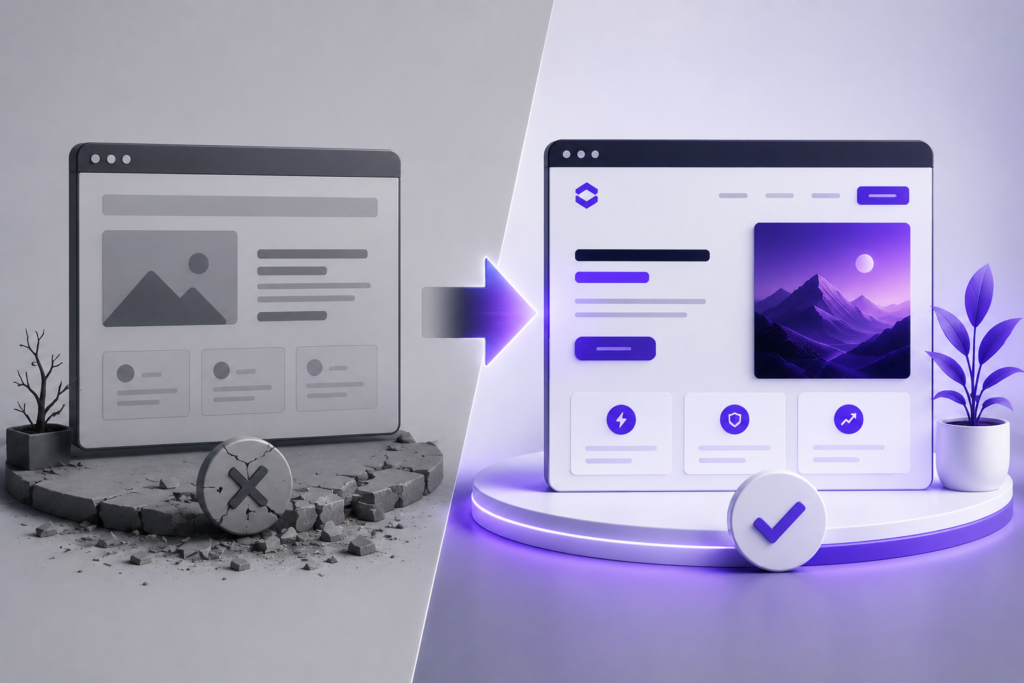
Sometimes the smarter investment is rebuilding.
Why a $500 Website Can Become More Expensive Than a $5,000 Website
Price and cost aren’t always the same thing.
Imagine Business A spends $500.
The website launches quickly.
But six months later they discover:
it’s slow
it looks generic
customers struggle on mobile
pages aren’t structured properly
nobody knows how to update it
the original developer disappeared
They eventually spend another $4,000 rebuilding it.
Total:
$4,500 + lost time + lost opportunities.
Business B spends $4,000 from the beginning on something appropriate for its needs.
Three years later, it’s still working.
Which website was cheaper?
That’s why businesses should consider:
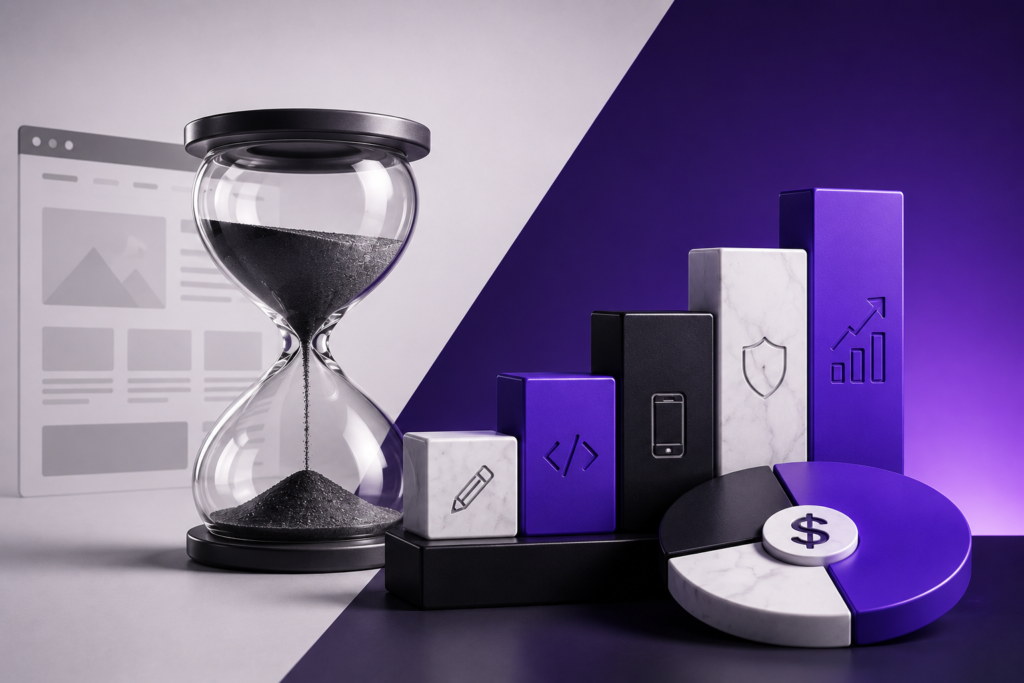
Cost over the website’s useful life
rather than simply:
Cheapest initial quote.
That doesn’t mean expensive automatically equals good.
It means value matters more than the sticker price.
How Much Should YOUR Business Spend?
Instead of starting with a random budget, answer five questions.
1. What is the website supposed to accomplish?
Is the goal:
credibility?
leads?
bookings?
sales?
applications?
subscriptions?
2. How valuable is one customer?
If one new customer is worth $100, the economics are different from a company where one contract is worth $25,000.
3. How important is your website in the sales journey?
Some businesses receive almost every lead through their website.
Others primarily rely on referrals.
Investment should reflect importance.
4. What functionality do you actually need?
Don’t pay for technology you won’t use.
But don’t remove critical functionality simply to make the initial quote smaller.
5. How long should the website serve the business?
A temporary launch page and a company’s primary digital platform require different investment levels.
Don’t Ask Only “How Much?”
When speaking with a web designer, ask:
What exactly is included?
Ask about:
strategy
design
development
mobile optimization
SEO foundations
copywriting
images
revisions
hosting
software licenses
analytics
training
maintenance
ownership
support after launch
Two $3,000 proposals can contain completely different amounts of work.
Comparing only the final number tells you very little.
What Does DodoFlow Build?
At DodoFlow, we approach websites as part of the business—not simply something that needs to look attractive.
We design and develop:
Business Websites
Professional websites built to establish credibility and turn visitors into enquiries.
Ecommerce Websites
Online stores designed around products, customer experience and conversion.
Landing Pages
Focused experiences for campaigns, advertising and lead generation.
Personal & Portfolio Websites
Digital platforms for professionals, creators, consultants, coaches and personal brands.
Website Redesigns
Transforming outdated websites into modern, responsive digital experiences.
Website Maintenance
Ongoing technical care to keep websites updated, secure and performing properly.
The objective isn’t simply:
“Let’s put your company online.”
It’s:
“Let’s build something that makes the company stronger online.”
What Should a Professional Website Include in 2027?
Regardless of price, a modern business website should generally deliver the fundamentals:
✓ Mobile-responsive design
✓ Fast loading experience
✓ Clear navigation
✓ Strong visual hierarchy
✓ Professional branding
✓ Clear calls to action
✓ Secure HTTPS
✓ Search-friendly architecture
✓ Accessible content structure
✓ Analytics capability
✓ Reliable forms
✓ Easy content management
Then additional functionality should be determined by your actual business model.
Not by a list of trendy features.
Frequently Asked Questions
How much does a basic small business website cost?
DIY sites can cost relatively little beyond software, hosting and your own time, while professionally designed sites generally begin in the low thousands and increase according to design, functionality, content and complexity. Current 2026 pricing references put professional design from roughly $1,500 upward, with broader professional project ranges reaching several thousand dollars or more.
Why are web design quotes so different?
Because “website” isn’t a standardized product. Design quality, page count, functionality, ecommerce, content creation, SEO, integrations, animations and ongoing support can dramatically change the workload.
Is WordPress good for small businesses?
It can be an excellent choice when a business wants flexibility, content management, blogging, SEO capabilities and room to expand. The right platform, however, depends on what the business actually needs.
Do I need website maintenance?
If your website relies on software that receives updates—particularly themes, plugins and integrations—ongoing maintenance is strongly recommended. Maintenance can also cover backups, security, performance monitoring and content updates.
How long does it take to build a small business website?
A simple website may take a few weeks, while a custom or ecommerce project can take considerably longer. Content readiness, feedback speed, functionality and revision cycles often affect the timeline as much as development itself.
Should I choose the cheapest web designer?
Not automatically. Compare scope, portfolio, communication, ownership, support, performance and what’s actually included. The cheapest quote can be good value—or it can omit work you’ll have to pay for later.
A Website Shouldn’t Just Cost Money. It Should Do a Job.
That’s ultimately the distinction that matters.
A website isn’t successful because:
it has beautiful animations.
It isn’t successful because:
it cost $10,000.
And it isn’t successful because:
the designer won an award.
It’s successful when it helps accomplish the purpose it was built for.
That might mean:
generating enquiries
selling products
building credibility
booking appointments
attracting talent
educating customers
supporting advertising campaigns
Start with the business objective.
Then determine the website required to achieve it.
Ready to Find Out What Your Website Should Cost?
You don’t need to guess which package or price range applies to your business.
Tell DodoFlow what you’re building, what isn’t working with your current website, or what you want your next website to accomplish.
We’ll use that information to understand the project and recommend the appropriate direction.